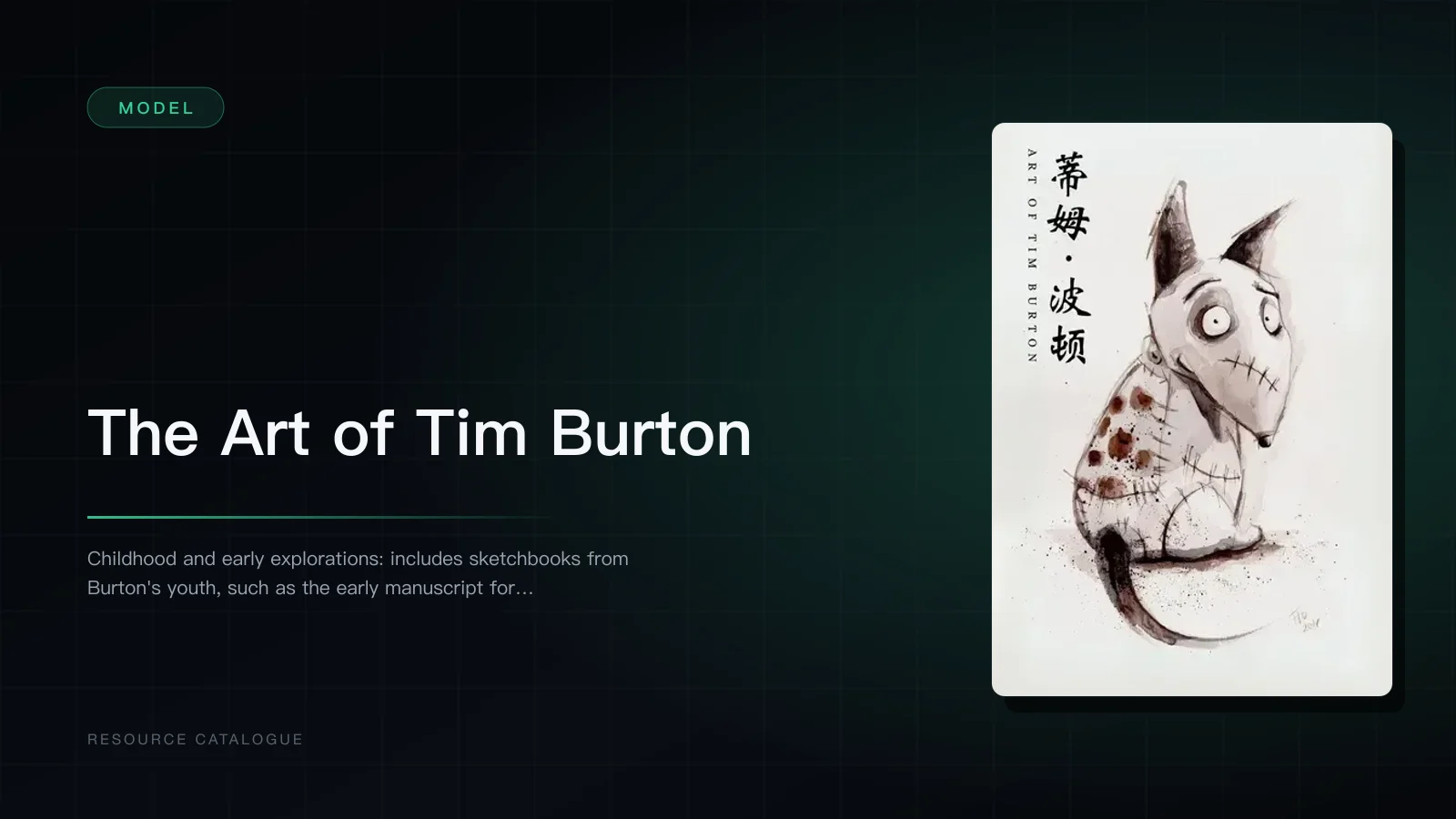
 The Art of Tim Burton is a visual encyclopedia that presents the artistic career of the maverick director Tim Burton in full. He was personally involved in its planning, and it was published by Steeles Publishing in 2009. This 434-page hardcover tome takes a visual feast of Gothic aesthetics and dark fairy tales as its core, revealing the creative code behind Burton’s journey from childhood doodles to Hollywood classics through more than 1,000 precious illustrations and in-depth text. The following analysis is organized around three dimensions: content, design and value.
I. Content Structure: A Panoramic View of a Forty-Year Artistic Universe
1. Timeline of the Creative Evolution
- Childhood and early explorations: Includes sketchbooks from Burton’s youth, such as the early manuscript for Frankenweenie, showing his early fascination with monsters and the theme of loneliness timburton.com.
- Initiation into the film industry: Animation sketches from his Disney period (such as Hansel and Gretel) and storyboard drafts for Vincent, revealing his transition from animator to director timburton.com.
- The peak of his mature period: Covers concept design for landmark works such as Edward Scissorhands, Sleepy Hollow and Big Fish, including unused character proposals (such as the original Penguin design for Batman Returns) timburton.com.
2. Theme-Driven Chapter Design
The book is divided into 13 chapters, built around the core motifs of Burton’s work:
- Monster aesthetics: Analyzes the creative logic behind the twisted characters in Corpse Bride and Sweeney Todd, emphasizing “poetry within ugliness”.
- Gothic settings: Shows architectural sketches of Halloween Town from The Nightmare Before Christmas, and the dark Baroque style of the Red Queen’s castle in Alice in Wonderland.
- Narratives of marginalized figures: Through Willy Wonka’s costume design in Charlie and the Chocolate Factory, explores Burton’s empathy for “social misfits” timburton.com.
3. Unreleased Artistic Treasures
- Private archives revealed: Includes impromptu doodles on napkins, portraits made for friends, and concept art for unrealized projects such as the planned Bride of Frankenstein remake timburton.com.
- Cross-disciplinary art experiments: Includes Burton’s morbid illustrations for the poetry collection The Melancholy Death of Oyster Boy, and the original storyboards for the Stainboy web shorts timburton.com.
II. Design and Production: An Immersive Visual Narrative Experience
1. The Artistry of Binding and Printing
- Physical design: An oversized 11×12-inch format with a hardcover stamped with Burton’s signature spiral pattern; the interior includes several full-page fold-out illustrations (such as the dynamic breakdown of the Headless Horseman in Sleepy Hollow), heightening the visual impact.
- Materials and craftsmanship: The Deluxe Edition comes with a limited-edition lithograph signed by Burton, using special inks to reproduce the feel of his hand-drawn work; the Standard Edition uses matte art paper to present the texture of the original drawings.
2. Multimedia Narrative Integration
- Dynamic visual presentation: Transparent acetate inserts recreate the leather texture of Catwoman’s costume in Batman Returns, producing shifting light and shadow effects as the pages are turned timburton.com.
- Echoes of sound and text: The book quotes fragments of Danny Elfman’s score for The Nightmare Before Christmas, which together with the character design drawings creates a cross-sensory experience timburton.com.
III. Value and Significance: A Revelation on Artistic Creation
1. Inspiration for Creators
- A methodology of stylization: Reveals how Burton turned personal experience (such as childhood loneliness) into visual symbols — for example, the metal limbs in Edward Scissorhands symbolizing emotional isolation.
- Practicing cross-media narrative: Shows the complete transformation process from sketch to film, such as the evolution of Corpse Bride from clay models to stop-motion animation timburton.com.
2. Cultural and Collectible Value
- A pilgrimage guide for fans: Includes conversations between Burton and long-time collaborators, such as costume designer Colleen Atwood revealing the Victorian aesthetics of Sweeney Todd timburton.com.
- Investment-grade collectible: First-edition hardcovers command premiums of up to 300% on the second-hand market, and the limited Deluxe Edition is a frequent auction item.
3. Metaphors for Social Issues
- Rebellion against mainstream aesthetics: Through the design of the ape leader in Planet of the Apes, it explores the relativity of “standards of beauty and ugliness”, echoing Burton’s concern for marginalized groups timburton.com.
- Balancing technology and humanity: The mechanical design sketches for Mars Attacks! metaphorically suggest how technological development erodes human emotion timburton.com.
IV. Reader Reviews and Buying Advice
- Critical recognition: Praised by The New York Times as “the benchmark of film art books” and the namesake publication of a MOMA exhibition, establishing its academic standing timburton.com.
- Fan feedback: Douban readers praise it as “wallpaper-grade art on every page”, but note that the price point above 500 yuan is steep.
- Where to buy: The Standard Edition can be ordered from Amazon (about $70) or the official website; the Deluxe Edition is available only through Steeles Publishing’s limited channels.
Conclusion: A Bible of Gothic Aesthetics, a Revelation on Artistic Creation
The Art of Tim Burton is not only a collection of film art, but also the spiritual autobiography of a visual poet. Through Burton’s signature dark romanticism, it deconstructs the boundary between “the bizarre” and “the classic”, letting readers glimpse, in twisted lines and cool tones, an artist’s eternal questioning of human nature, loneliness and beauty. Whether for its collectible value or as creative reference, this book is an indispensable key to understanding the Burton universe.
One-line recommendation: “Open it and you will step into a Gothic fairy tale woven with brushes and camera lenses; every page is saying: true art always belongs to those souls out of step with the world.”