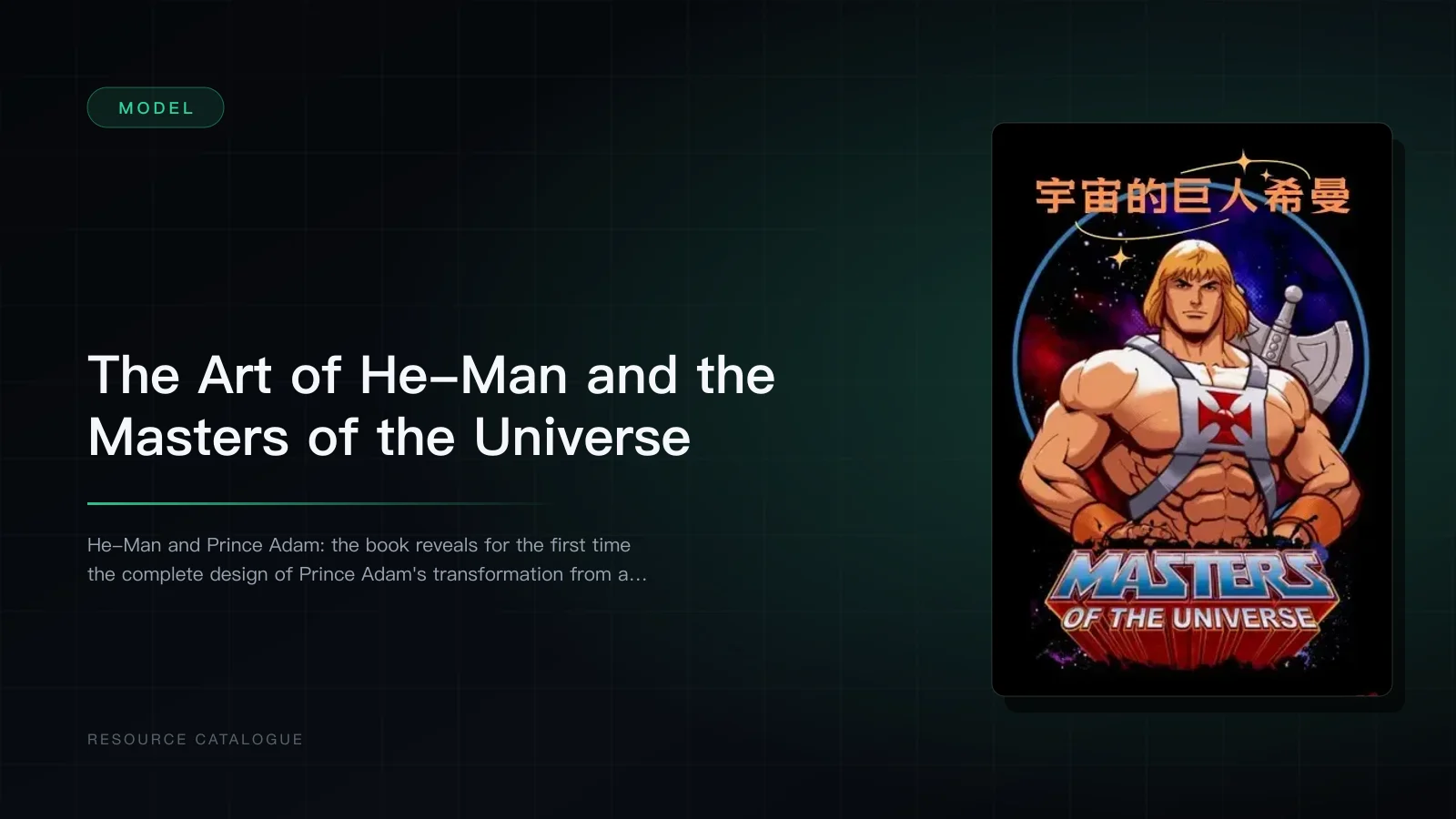
 The Art of He-Man and the Masters of the Universe is the official art book published by Dark Horse Comics on January 11, 2023, focusing on the creative process behind Netflix’s hit animated series Masters of the Universe: Revelation. Presented as a 192-page hardcover, it deconstructs the modern reimagining of this classic IP through a wealth of concept art, design sketches and production notes. The following is an in-depth analysis of its core content, artistic features, creative value and collectible highlights:
I. Content Structure and Core Highlights
1. A Radical Reimagining of Character Design
- He-Man and Prince Adam: The book reveals for the first time the complete design of Prince Adam’s transformation from a scrawny youth into a muscular hero. Early sketches show that the production team deliberately emphasized the physical difference before and after the transformation — Adam’s slender build contrasts sharply with He-Man’s exaggerated musculature, visualizing the character’s split identity through skeletal adjustments and symbolic costume elements (such as the golden belt symbolizing the inheritance of power).
- Teela’s promotion to lead character: The new series elevates Teela from a supporting role to a central figure, and the art book shows her evolution from a short-haired warrior to a bounty hunter. Through the worn details of leather materials and the industrial feel of her mechanical arm armor, the artists give the character the aura of a “broken guardian”, while her asymmetrical hairstyle and cool-toned clothing hint at inner conflict and growth.
- Skeletor as a schemer: Unlike his comedic villain role in the 1980s cartoon, the new Skeletor is reimagined as a strategist well versed in both magic and technology. The multiple concept designs collected in the book show armor that fuses alien metal with organic bone elements; the cracks in his face mask metaphorically convey his pathological hunger for power, while purple energy veins echo his magical nature.
2. An Epic Construction of Settings and Worldview
- The twin landscapes of Eternia: The art book analyzes in detail the visual divide between Eternia’s “light hemisphere” and “dark hemisphere”: the light side is dominated by Art Nouveau-style floating castles and crystal forests, while the dark side creates a sense of oppression through rusted metal structures and lava fissures. The interior structure of Castle Grayskull is especially striking — its gear-driven mechanical core combined with magical runes concretizes the idea of “technology and magic coexisting”.
- The alienated aesthetics of Snake Mountain: Skeletor’s lair is reinterpreted as a “living fortress”, with concept art showing biological walls (vein-like pipes, fleshy textures) fused with mechanical devices. The book notably includes an unused “serpent throne” design — built from the fossilized bones of a giant serpent, with eyes that could fire lasers — which was ultimately replaced by a more ceremonial metal throne because it was too horrifying.
- A visual spectacle of alien creatures and technology: Eternia’s ecosystem is fully presented in the art book, including glowing “star-marked beasts”, energy-devouring “void worms”, and the half-mechanical army “Techno-Troopers” developed by Skeletor. These designs fuse H.R. Giger’s biomechanical aesthetic with the industrial-punk style of Star Wars, creating a distinctive visual identity.
3. Deep Insights into the Creative Process
- Visualizing narrative symbols: The production team reinforces narrative tension through color scripts: the sacredness of Castle Grayskull is conveyed in cool blue-purples, while the conspiratorial atmosphere of Snake Mountain is dominated by crimson and dark gray. The book specifically analyzes the evolution of the “Sword of Power” design — the skull totem on the hilt moved from figurative to abstract in order to enhance its mystery.
- Discarded original concepts: Unreleased early proposals show that the team once considered giving Skeletor “elemental control” abilities (such as summoning lava and frost) and designed corresponding elemental avatar forms. These concepts were shelved because they conflicted with the main narrative, but the flame textures and frost crystal details in the sketches still have great artistic value.
- Technical archives of cross-media collaboration: The book includes design material for the tie-ins between the animation and the toy line, such as the “Viking He-Man” and “Savage He-Man” variants. These designs not only served the animated narrative but were also turned directly into Mattel’s Masterverse toy line, reflecting the industrialized thinking behind IP development.