
1. Dynamically Decoding Muscle Coordination
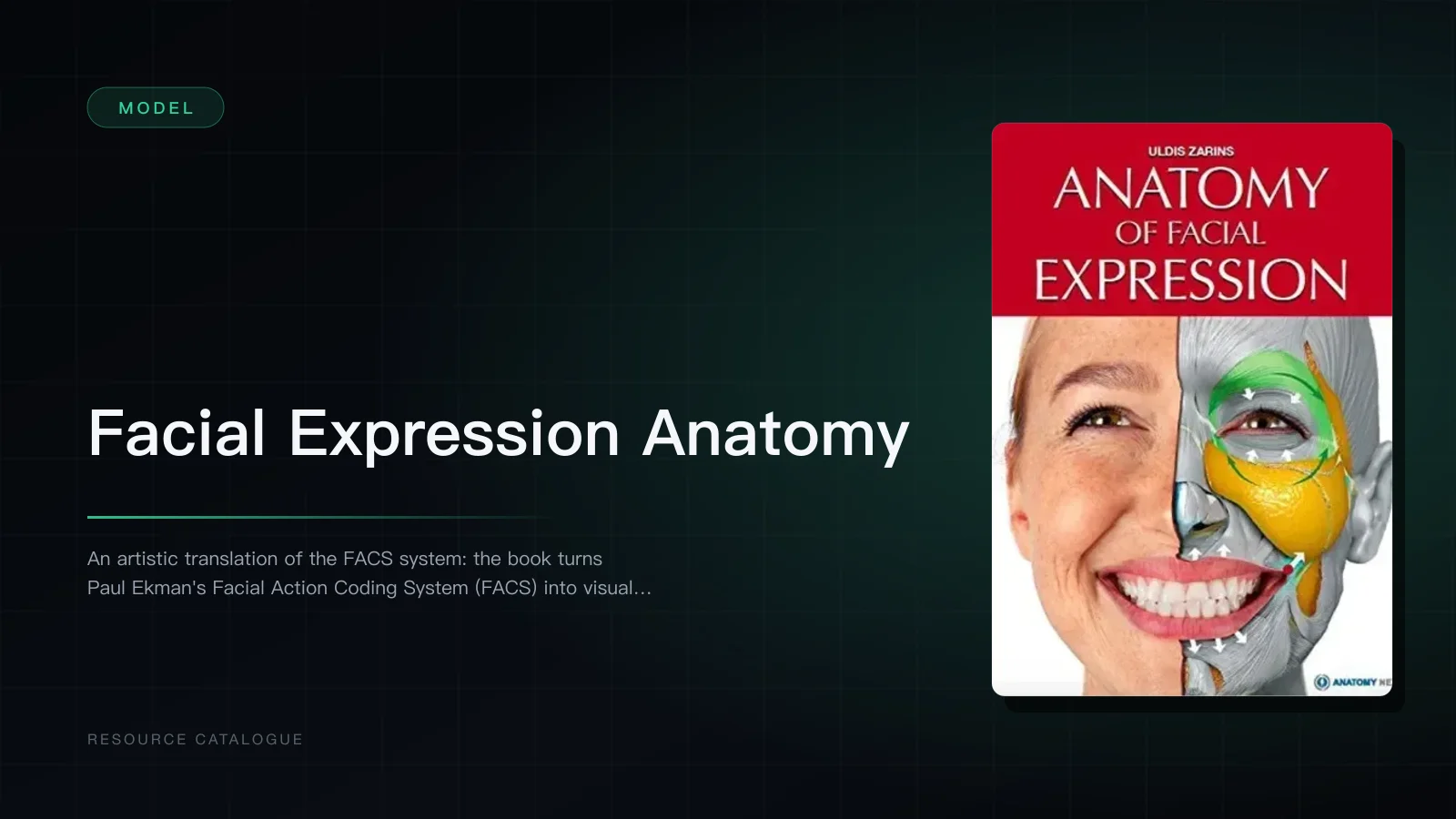
- An artistic translation of the FACS system: The book turns Paul Ekman’s Facial Action Coding System (FACS) into visual language, for example breaking a smile down into the combination of **AU6 (lower eyelid tightening) + AU12 (raising the corners of the mouth) + AU25 (parting the lips)**, and uses 3D scan models to show how these muscle masses change volume in motion.
- The relationship between expression lines and bone: By comparing the mechanism that forms brow-bone shadows when the corrugator muscle contracts, it explains why, in an angry expression, the superimposition of the frontalis and procerus produces vertical wrinkles. The book introduces an original concept, the “expression chain”, which treats the orbicularis oculi, zygomaticus major and orbicularis oris as a single whole and explains their coordinated action during hearty laughter.
2. A Three-Dimensional Visual Revolution
- Dynamic anatomy sequences: Real facial-expression photographs are overlaid with 3D muscle renders to present the continuous change of muscles from relaxation to contraction. For example, when the frontalis lifts in a surprised expression, the book compares the height differences of the bulging forehead skin and labels the “muscle–bone” occlusion relationships; this dynamic perspective is crucial for sculptors capturing the momentary tension of an expression.
- Morphological differences across ages and ethnicities: Provides comparison charts of facial fat distribution in infants, adults and the elderly, explaining why older people develop downturned mouth corners due to atrophy of the buccal fat pad. The book also analyzes how facial bony landmarks in different ethnicities (such as the nasal bone angle in Caucasians versus East Asians) affect the presentation of expressions.
3. Practical Tools and Digital Resources
- Proportion calculators and error comparisons: Addressing the beginner’s common mistake of “excessive drooping of the mouth corners”, the book provides a proportional formula linking mouth-corner droop angle to cheekbone height, and compares the degree of muscle-mass collapse in incorrect examples. The official website (anatomy4sculptors.com) offers a library of 3D expression models that can be imported into Blender, with adjustable muscle contraction intensity for observing changes in the surface form.
- Weekly updated video lessons: The official website publishes tutorial videos every week, for example demonstrating how to distinguish surprise from fear through “the degree of caruncle exposure”; these real-time interactive resources make up for the static limitations of a printed book.